
Table of Contents
Advanced Materials and Coatings for Enhanced Corrosion Resistance
oil casing plays a crucial role in the Oil and Gas industry, providing structural support and protection for the wellbore. Over time, oil casing is subjected to harsh environmental conditions, including high temperatures, pressure, and corrosive substances. As a result, corrosion is a major concern for oil casing, as it can lead to structural failure and costly repairs. To address this issue, researchers and engineers have been developing advanced materials and coatings to enhance the corrosion resistance of oil casing and increase its service life expectancy.
One of the key innovations in oil casing design is the use of corrosion-resistant alloys. These alloys are specifically formulated to withstand the corrosive effects of oilfield environments, such as high levels of hydrogen sulfide and carbon dioxide. By incorporating these alloys into the manufacturing process, oil casing can better resist corrosion and maintain its structural integrity over a longer period of time.
In addition to corrosion-resistant alloys, researchers have also been exploring the use of advanced coatings to protect oil casing from corrosion. These coatings are applied to the surface of the casing and act as a barrier against corrosive substances. Some of the most common types of coatings used for oil casing include epoxy, polyurethane, and ceramic coatings. These coatings not only provide an additional layer of protection against corrosion but also improve the overall durability of the casing.
Furthermore, advancements in nanotechnology have enabled the development of nanocomposite coatings for oil casing. These coatings are made up of nanoparticles dispersed in a polymer matrix, which provides enhanced corrosion resistance and mechanical strength. Nanocomposite coatings have shown great promise in protecting oil casing from corrosion and extending its service life expectancy.
Another innovative approach to enhancing the corrosion resistance of oil casing is the use of self-healing coatings. These coatings contain microcapsules filled with corrosion inhibitors that are released when the coating is damaged. This self-healing mechanism helps to Repair any cracks or imperfections in the coating, preventing corrosion from spreading and prolonging the life of the oil casing.
Overall, the development of advanced materials and coatings for oil casing represents a significant step forward in improving the longevity and performance of oilfield equipment. By incorporating corrosion-resistant alloys, advanced coatings, nanocomposites, and self-healing technologies, oil casing can better withstand the harsh conditions of the oilfield and reduce the need for frequent Maintenance and replacement.
annular tubes Manufacturers
In conclusion, the innovative design of oil casing with enhanced corrosion resistance is a testament to the ongoing efforts of researchers and engineers to improve the efficiency and reliability of oil and gas operations. By investing in advanced materials and coatings, oil Companies can ensure the longevity of their equipment and minimize the risk of costly downtime due to corrosion-related issues. As technology continues to evolve, we can expect to see even more groundbreaking innovations in oil casing design that will further increase its service life expectancy and contribute to the sustainability of the oil and gas industry.
Innovative Geometric Designs for Improved Strength and Durability
Oil casing is a critical component in the oil and gas industry, serving as a protective barrier for the wellbore and ensuring the integrity of the well. Over the years, there have been significant advancements in the design and manufacturing of oil casing to improve its strength and durability. One of the key innovations in this regard is the development of geometric designs that enhance the casing’s performance and increase its service life expectancy.
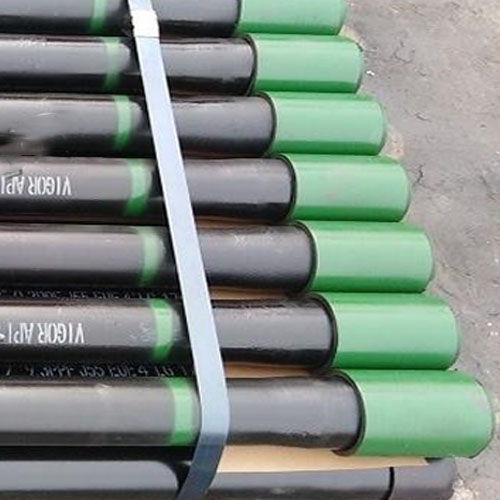
Traditional oil casing designs typically feature a cylindrical shape, which provides adequate protection for the wellbore. However, advancements in technology have allowed for the development of more complex geometric designs that offer superior strength and durability. These innovative designs are inspired by nature and incorporate principles of biomimicry to create casing that is more resilient to the harsh conditions of the oil and gas industry.
One such design innovation is the use of helical patterns in the casing’s construction. Helical patterns are spiral shapes that are found in nature, such as in the structure of DNA or the shells of certain mollusks. By incorporating helical patterns into the casing’s design, manufacturers are able to increase its strength and resistance to external forces. The helical shape distributes stress more evenly along the casing, reducing the likelihood of failure and increasing its service life expectancy.
Another innovative geometric design for oil casing is the use of fractal patterns. Fractals are complex geometric shapes that exhibit self-similarity at different scales. By incorporating fractal patterns into the casing’s construction, manufacturers are able to create a structure that is more resistant to corrosion and wear. The intricate design of fractals increases the surface area of the casing, allowing for better heat dissipation and improved resistance to chemical reactions.
https://youtube.com/watch?v=goTqY010yDA
In addition to helical and fractal patterns, manufacturers are also exploring the use of other geometric shapes, such as honeycomb structures and Voronoi patterns, in the design of oil casing. These geometric designs offer unique advantages in terms of strength, durability, and performance. Honeycomb structures, for example, provide excellent impact resistance and thermal insulation, making them ideal for use in harsh environments. Voronoi patterns, on the other hand, offer superior load distribution and stress resistance, ensuring the casing’s integrity under extreme conditions.
Overall, the use of innovative geometric designs in oil casing represents a significant advancement in the industry. By drawing inspiration from nature and incorporating principles of biomimicry, manufacturers are able to create casing that is stronger, more durable, and longer-lasting. These geometric designs not only improve the performance of oil casing but also contribute to the sustainability of the oil and gas industry by reducing the need for frequent replacements and repairs.
In conclusion, the development of innovative geometric designs for oil casing is a testament to the industry’s commitment to continuous improvement and technological advancement. By harnessing the power of nature and incorporating complex geometric shapes into the casing’s construction, manufacturers are able to enhance its strength, durability, and service life expectancy. As the demand for oil and gas continues to grow, these innovative designs will play a crucial role in ensuring the integrity and reliability of oil wells around the world.


